

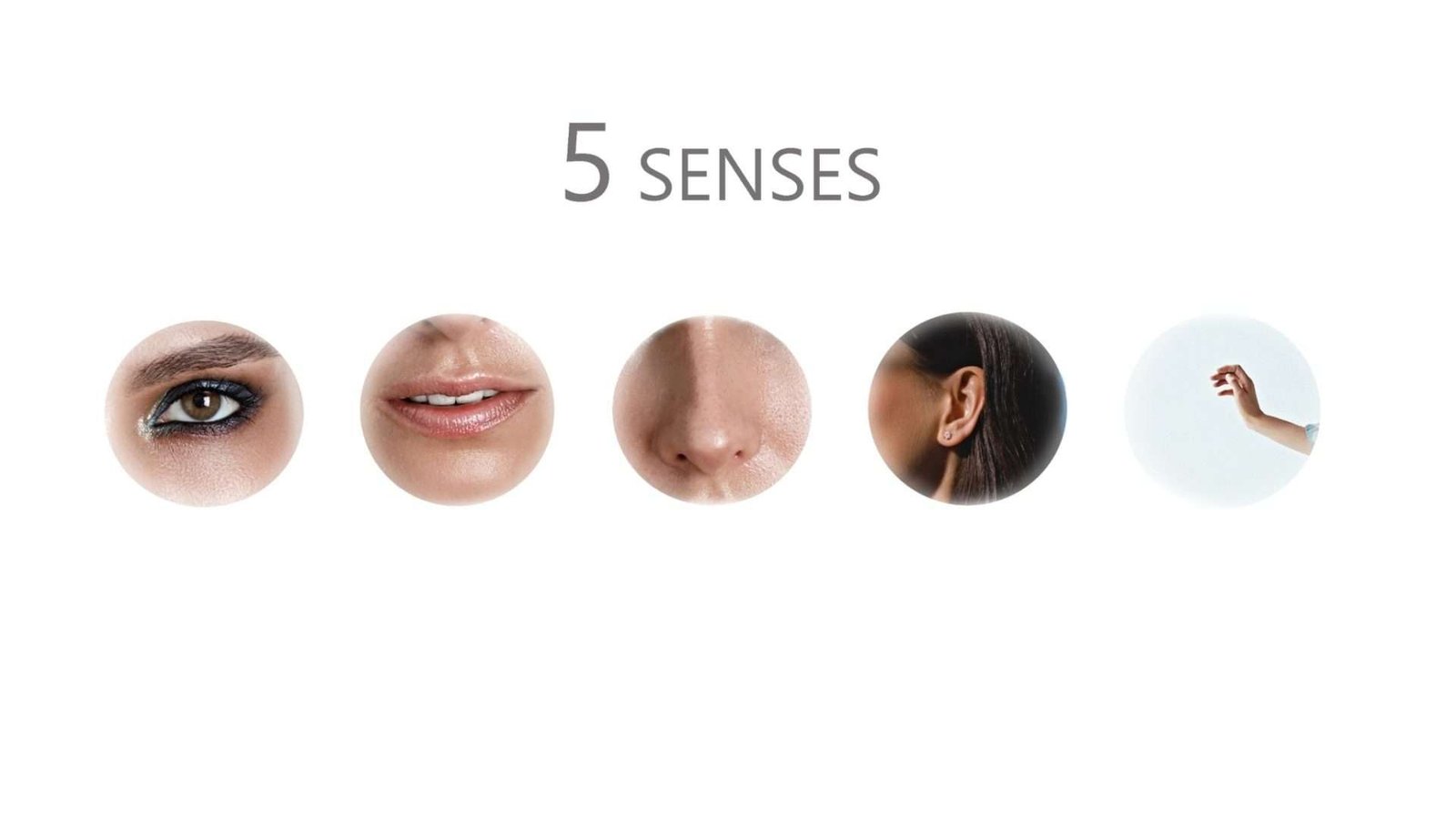
Sensory Preferences
This article looks at why we all view the world differently and how our Sensory Preferences affect the way we relate to other people and the world around us. Read on to discover what the five main different Sensory Preferences are. How understanding our senses can help us in a therapeutic setting and how you can quickly discover what your own personal Sensory Preferences are…
Article Summary
Why do we all view the world differently?
We all view the world in a slightly different way. Our perception of things is never going to be exactly the same as the next person and nor should it be. This is only enhanced by the fact that we all have different ‘sensory preferences’. These preferences typically fall under Visual, Auditory, Kinesthetic, and occasionally Gustatory and Olfactory.
Understanding our individual sensory preferences can be really useful in a therapeutic setting and help empower us to develop coping strategies that work best for us in everyday life, improving our emotional well-being and mental health. So, if understanding Sensory Preferences ‘sounds’, ‘feels’ or ‘looks’ like an interesting topic for you, then please read on!
What are the five main different Sensory Preferences
Visual Preference
People with a dominant visual preference tend to process information by seeing it. They are often drawn to colours, shapes, patterns, and spatial arrangements. They rely on visual stimuli like diagrams, pictures, videos, and written text.
Common traits might include: –
– Strong visualisation skills or thinking or seeing things in images or symbols.
– A tendency to notice details, such as body language or the layout of a room.
– A preference for reading or observing over listening.
– Using phrases like “I see what you mean” or “Looks good to me.”
Auditory Preference
Individuals with an auditory preference on the other hand learn and process information best through sound. They prefer hearing instructions, discussions, and verbal cues. They are sensitive to tone, rhythm, and spoken language.
Common traits might include: –
– Strong listening and verbal communication skills.
– Enjoying discussions, lectures, and audio-based learning (e.g., podcasts).
– Remembering things they hear better than things they see.
– Using phrases like “I hear what you’re saying” or “That sounds right.”
Kinesthetic Preference
Kinesthetic individuals learn through movement and touch. They prefer hands-on experiences and physical interaction with their environment. They rely on physical sensations and actions to understand concepts.
Common traits might include: –
– Enjoying hands-on tasks, like building, crafting, or moving.
– Having difficulty sitting still for long periods and often need physical activity.
– Learning by doing rather than reading or listening.
– Using phrases like “I feel what you’re saying” or “Let’s get a handle on this.”
Gustatory Preference (Taste)
Though less common in terms of learning styles, some people are more attuned to taste. They may have a strong preference for food-related experiences or associate learning with taste-based memories. Information is associated with flavours or eating experiences.
Common traits might include: –
– Highly aware of flavours and food textures.
– May associate memories or experiences with specific tastes.
– Most applicable in culinary contexts or food-based learning.
Olfactory Preference (Smell)
Some individuals might even have a heightened sense of smell and may use this to interpret their environment or recall memories. They process information through scents and associate them with people, places, or experiences.
Common traits might include: –
– Being highly sensitive to odours and fragrances.
– Associating strong memories with specific smells.
– Most relevant in environments where scent plays a significant role (e.g., perfumery, cooking, or aromatherapy).
Blended Preferences
– Many people don’t have a single dominant sense but instead use a combination of these sensory preferences.
For example:-
– Visual-Auditory: Learning well through both seeing and hearing (e.g., watching videos with audio commentary).
– Kinesthetic-Visual: Learning by physically interacting with visual materials (e.g., drawing or assembling models).

How Understanding Sensory Preferences Helps in Therapy
Understanding sensory preferences can be highly beneficial when you come and see me for a therapy session at the Wisdom Room because it allows me to tailor my approach to your very personal requirements. When we understand each other’s sensory preferences, we can build rapport and communicate in ways that resonate better. For example, a visual learner may benefit from guided visualisation or journaling exercises, while an auditory learner may respond better to verbal discussions or listening exercises. When therapy aligns with a person’s natural way of processing the world, clients are more likely to feel understood, valued, and engaged in the therapeutic process.
Personalised Therapy Techniques
Visual clients:
May respond well to visualisation exercises, be able to picture images in their mind’s eye during hypnosis, or work well with guided imagery to process emotions or trauma. Creating mind maps, diagrams, vision boards, or using Wisdom Worksheets and journalling can also help them better understand their thoughts and feelings.
Auditory clients:
May respond better to verbal processing techniques, such as talk therapy, storytelling, hypnotherapy or listening to meditations or MP3s. Discussing feelings aloud may also help these individuals reflect on and cope with challenges. Guided affirmations and healing htz music may also be particularly soothing.
Kinesthetic clients:
May work better when they connect with their body wisdom and incorporate deep relaxation practices and feel into their issues. Grounding techniques, body scanning, muscle relaxation and somatic experiencing (where clients are encouraged to become aware of physical sensations in their body) can also be extremely helpful for processing trauma or stress.
Creating a Safe Space
For clients who feel overwhelmed by certain sensory stimuli, therapy can provide a controlled environment that minimizes triggers and maximizes comfort. This can make therapy more effective for individuals who experience sensory overload, anxiety, or trauma related to certain sensory inputs.
How You can Discover Your Personal Sensory Preferences
As we have discovered, identifying your personal sensory preferences i.e. whether you lean more toward visual, auditory, kinesthetic, or a combination of them all – can help you better understand how you learn, communicate, and process information. But how can you discover what your personal sensory preferences really are?
Why not take the Sensory Preference Quiz?
Here’s a simple quiz to help you discover your personal sensory preferences (Visual, Auditory, or Kinesthetic).
Read each question and choose the option (A, B, or C) that best describes your natural tendencies. At the end, we’ll tally the results to determine your dominant sensory preference.
1. When trying to learn something new, what do you find most helpful?
A) Seeing diagrams, charts, pictures, or reading about it.
B) Hearing someone explain it or discussing it with others.
C) Doing a hands-on activity related to it.
2. When you remember a past event, what stands out the most?
A) The way things looked—the colours, shapes, and visual details.
B) The sounds you heard—conversations, music, or other noises.
C) How you felt physically or what you were doing at the time.
3. How do you prefer to give someone directions?
A) Draw a map or show them visually.
B) Explain it verbally.
C) Walk them through it, showing step by step in person.
4. How do you prefer to relax after a stressful day?
A) Watching TV, reading, or looking at something peaceful.
B) Listening to music, a podcast, or talking to a friend.
C) Doing something active like exercising, crafting, or cooking.
5. If you need to remember a phone number, do you?
A) Visualise the numbers in your mind.
B) Repeat the number aloud or in your head.
C) Write it down or tap it into your phone to remember it.
6. In a classroom or meeting, do you find it easiest to concentrate when:
A) There are visual aids like slides, charts, or notes.
B) The speaker has a clear voice and explains things well.
C) You’re allowed to take notes, move around, or interact physically.
7. When you’re trying to explain a complex idea to someone, do you:
A) Draw a picture, create a graph, or show them examples.
B) Talk them through it, explaining in detail.
C) Use gestures, move around, or involve them in a hands-on demonstration.
8. You prefer hobbies that involve:
A) Visual creativity, like photography, drawing, or watching movies.
B) Listening, like music, podcasts, or having conversations.
C) Physical activity, like sports, gardening, or building things.
9. When you’re working or studying, what helps you focus best?
A) Quiet space with minimal distractions so I can visually focus.
B) Listening to music, podcasts, or background noise.
C) Taking frequent breaks, moving around, or using my hands.
10. What do you tend to remember when meeting new people?
A) Their face or what they were wearing.
B) Their voice or something they said.
C) Where you met them or how you shook hands.
SCORING
– Count how many A’s, B’s, and C’s you selected.
Mostly A’s – You have a Visual Sensory Preference.
Mostly B’s – You have an Auditory Sensory Preference.
Mostly C’s – You have a Kinesthetic Sensory Preference.
Perhaps you will discover you have one very dominant Sensory Preference or you lean heavily towards two. Others may find their answers are quite evenly distributed, and you you may have a balanced sensory style, using a mix of all three.
Let me know how you scored!

ABOUT THE AUTHOR…
As well as being a writer & creative, Jane Eggleton is an experienced and fully qualified Integrative Therapist, Clinical Hypnotherapist, NLP Practitioner and transformational Coach.
Jane is also the Founder and Director of the Wisdom Room: a holistic therapy practice that helps people from all walks of life, across the globe. Her personal passion is to help people reconnect with their own Inner Wisdom and release any hidden fears and her professional aim is to help clients regain their sense of well-being, quickly, safely, and in a sustainable, independent manner.
You can also find Jane on Instagram or Follow her on Facebook or email Info@wisdomroom.co.uk

CLICK HERE To Make An Enquiry Today
Want to find out more? Why not have a 1-2-1 Online or In-Person Therapy Session with Jane at the Wisdom Room…


Download Relevant Wisdom Room Hypnotherapy MP3s




Discover More FREE Wisdom Room Advice & Articles