

Sycamore Gap Tree: Endings & New Beginnings
“I think the whole nation was devastated when the iconic Sycamore Gap Tree (that stood in a dip on Hadrian’s Wall) was felled in a mindless act of vandalism. So, the news that the stump of the famous Sycamore Gap Tree is now showing signs of life, is something to be truly celebrated…
This article looks at the important message of enduring hope and resilience that we can learn from the Sycamore Gap Tree. And how the cycle (or circle of life) affects both nature and the human condition. Read on to discover how we are so closely connected to trees. Why there really are benefits from hugging a tree or bathing in a forest! And how the Sycamore Gap Tree story can help us honour endings, welcome new beginnings and accept change…
“New beginnings are often disguised as painful endings…” ~ Lao Tzu
The history of the Sycamore Gap Tree…
The Sycamore Gap Tree (also known as the Robin Hood Tree) was a prominent sycamore tree that stood in a dramatic dip in Hadrian’s Wall in Northumberland. The picturesque setting of the tree made it a popular subject for photographers, tourists, and hikers and its fame was boosted when it featured prominently in the 1991 film ‘Robin Hood: Prince of Thieves’, starring Kevin Costner. The tree gained widespread recognition and affection, becoming an iconic symbol of the region and was even labelled a UNESCO World Heritage Site.)
The exact age of the Sycamore Gap Tree is uncertain, but it is believed to have been planted around the late 19th century. However long the tree had been there though, it became a significant and beloved feature of the landscape, over the decades, with a deep connection to the local heritage and community. So, when the tree was attacked with a chainsaw and deliberately hacked down in September 2023 there was, understandably, a huge national outcry.
Our deep connection with trees
Humans are deeply connected to trees and so when The Sycamore Gap Tree was deliberately cut down. It felt like a stab in the heart to us too. There is a good reason why trees hold profound cultural and spiritual significance in many societies. They are often seen as symbols of life, growth, wisdom and continuity. To be revered and respected. So, when the Sycamore Gap Tree was brutally cut down for no good reason. It cut deeply. Those of us particularly connected to the rhythms of nature and the land felt deeply wounded and betrayed.
If you think about it many cultures have sacred trees or forests, and trees frequently appear in myths, legends, and religious texts throughout the ages. How can we forget the Tree of Knowledge (in the Garden of Eden), the Bodhi Tree (Buddhist Mythology), the Golden Apple Tree (Greek Mythology), or The Tree of Life? Even Tolkien included the White Tree of Gondor in his books. And if you’ve watched James Cameron’s film Avatar you can’t forget the pivotal tragic moment when the tribe’s ancient Hometree is demolished. You know what they say about art imitating life!
Of course, on a more practical level, we also can’t underestimate the absolutely vital role that trees play in the ecosystem too. By producing oxygen, improving air quality, conserving water, preserving soil, and supporting wildlife. Trees literally help us live and breathe. They have also provided essential resources throughout human history offering fruits, nuts, and other edible parts that have been crucial for sustenance. And of course, wood from trees have been used for shelter, tools, and fire, which are also fundamental to human survival.
Why it really is good to hug a tree
From an evolutionary perspective, it makes sense that early humans lived in close proximity to trees, especially in forested environments where they found food and shelter. This long history has likely ingrained a deep connection to trees within the human psyche.
Numerous studies have also shown that being around trees and nature can reduce stress, improve mood, and enhance overall mental health. This phenomenon is part of what is known as ‘nature therapy’ or ‘ecotherapy’. The biophilia hypothesis also suggests that humans have an innate tendency to seek connections with nature and other forms of life.
Some medical researchers even suggest that spending time in forests can boost the immune system. Phytoncides, which are organic compounds emitted by trees, have been shown to increase the activity of natural killer (NK) cells, a type of white blood cell that plays a critical role in the body’s defence against infections and cancer.
So perhaps tree hugging isn’t such a strange concept after all? In fact, the practice of ‘forest bathing’, which involves immersing oneself in a forest environment, has now been extensively studied and found to have numerous health benefits. Overall, the evidence overwhelmingly suggests that hugging trees and engaging with nature can be a simple yet powerful way to enhance well-being.
New shoots and new hope…
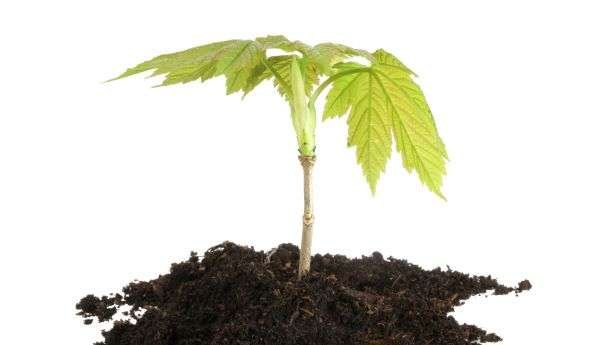
The good news, according to Park Rangers, is that new shoots have now emerged from the base of the Sycamore Gap Tree, giving hope that the historic tree lives on ten months after it was cut down. The National Trust and Northumberland National Park Authority hope the shoots will eventually grow to form new trees around the stump.
As any keen gardener with a sycamore tree nearby will tell you. Sycamore saplings are hardy little things and prolific re-seeders. They produce a large number of seeds each year, contained within spherical seed clusters that are often called ‘buttonballs’. These seed clusters break apart in late winter or early spring, releasing the seeds, which are then dispersed by wind and water.
Sycamore seeds can also germinate in a variety of soil conditions, although they thrive in moist, well-drained soils. This adaptability helps them establish in diverse environments. Once established, sycamore trees also grow rapidly, which allows them to quickly take advantage of available space and resources. Let’s hope that the Sycamore Gap Tree sapling will regenerate and continue to be a natural wonder and inspiration for the generations to follow.
The Cycle or Circle of Life
The cycle (or circle of life) is an important reminder to all of us that in nature (as in the human experience) new beginnings always follow endings and the death of one way of life is always the start of something new. Just when we mourn the loss of something. Life often has a wonderful way of sending us something new to celebrate and rejoice.
Many philosophies and natural phenomena highlight cycles, such as the changing seasons, day turning into night, and life cycles in nature. And in this sense, an ending is just a transition point within an ongoing cycle. It’s nature’s way. Life and death. Loss and rebirth.
When we view the beloved Sycamore Gap Tree as a metaphor for life it’s fitting somehow that it is now sharing an age-old important message of enduring hope and resilience and demonstrating the power of loss and rebirth which will hopefully inspire future generations…
Why every ending is really a new beginning…
The truth is, really every ending can be seen as a new beginning because it marks the conclusion of one phase and the commencement of another. Rather than spending too long looking back and becoming melancholy dwelling in the past or focusing on the closed door. It’s important that we always try and focus on the open door and what lies ahead of us. This viewpoint encourages embracing change and finding hope and possibilities in life’s inevitable transitions.
Although it can be incredibly challenging when things we love are torn from us (please see my article on loss & grief here). Endings often do create space for reflection, learning, and personal development. And the end of a relationship, job, or other significant phase can lead to self-discovery and new opportunities. Life is a series of interconnected stories. The conclusion of one story is simply the prologue to another, contributing to the overall narrative of a person’s journey.
It’s often natural to resist change or fear the unknown. But endings often provide a wonderful chance to reinvent oneself or one’s circumstances. It’s an opportunity to start fresh, set new goals, and pursue new paths. Every time a job or relationship ever ended for me it was because there was something better for me waiting around the corner. To conclude viewing endings as new beginnings is a mindset that fosters resilience and optimism. It helps us cope with change and see potential rather than loss and most importantly reminds us that even in the darkest of times. Life will endeavour to send us a seed or a sapling of hope…

WISDOM ROOM Guided Meditation:
Honouring Endings and Embracing New Beginnings
Find a quiet, safe, comfortable place where you won’t be disturbed. Sit or lie down in a relaxed position. Close your eyes and take a deep breath in, then slowly exhale. Allow your body to settle and your mind to calm.
Step 1: Centering Yourself
1. Begin by focusing on your breath. Inhale deeply through your nose, filling your lungs completely. Hold for a moment, then slowly exhale through your mouth. Repeat this cycle several times, allowing each breath to ground you in the present moment.
2. Do a full Body Scan. Starting from the top of your head, slowly move your awareness down through your body. Notice any areas of tension and consciously relax them. Now notice the most relaxed part of you and allow that feeling to spiral out. Feel your body unwinding…
3. Connect with your Inner Wisdom. Raise your internal gaze and imagine looking out from your third eye and gently ask your INNER WISDOM to come forward to guide you. Notice your heart expanding and your mind quietening and feel an enhanced sense of wellbeing…
Step 2: Reflecting on Endings
1. Bring to mind a recent ending in your life. It could be the end of a relationship, the end of a job, a phase of life, or even a habit you’ve let go of. Allow yourself to fully experience the emotions associated with this ending.
2. Acknowledge Your Feelings: Recognise any feelings of sadness, loss, relief, or gratitude. Accept these emotions without judgment. They are a natural part of the process. Notice what feelings come up to the surface for healing.
3. Release and Let Go: Imagine placing this ending into a small white box. See yourself gently closing the box and tying it shut with a beautiful ribbon. This is a part of your past that has shaped who you are but you are ready to let it go. Imagine placing the box on a cloud and gently send it on its way. Watch as it fades away in the distance.
Step 3: Embracing New Beginnings
1. Visualise the Future: Now, shift your focus to the new possibilities that lie ahead. Imagine a blank canvas, an empty box or an open door, symbolising the new beginning awaiting you.
2. Set an Intention: Reflect on what you hope to welcome into your life with this new beginning. It could be personal growth, new relationships, opportunities, or simply a sense of peace and renewal.
3. Affirmations: Repeat the following affirmations silently or out loud:
– “I am open to new possibilities.”
– “I embrace change with courage and optimism.”
– “Every ending leads to an exciting new beginning full of potential.”
Step 4: Grounding and Closing
1. Return to Your Breath: Bring your attention back to your breath. Take a few deep breaths, feeling the flow of air in and out of your body.
2. Gratitude: Take a moment to express gratitude for the lessons learned from past experiences and the new opportunities on the horizon.
3. Coming Back: Gradually bring your awareness back to your surroundings. Wiggle your fingers and toes, stretch gently, and when you’re ready, open your eyes.

ABOUT THE AUTHOR…
As well as being a writer & creative, Jane Eggleton is an experienced and fully qualified Integrative Therapist, Clinical Hypnotherapist, NLP Practitioner and transformational Coach.
Jane is also the Founder and Director of the Wisdom Room: a holistic therapy practice that helps people from all walks of life, across the globe. Her personal passion is to help people reconnect with their own Inner Wisdom and release any hidden fears and her professional aim is to help clients regain their sense of well-being, quickly, safely, and in a sustainable, independent manner.
You can also find Jane on Instagram or Follow her on Facebook or email Info@wisdomroom.co.uk

CLICK HERE To Make An Enquiry Today
Want to find out more? Why not have a 1-2-1 Online or In-Person Therapy Session with Jane at the Wisdom Room…


Download Relevant Wisdom Room Hypnotherapy MP3s



Discover More FREE Wisdom Room Advice & Articles